

Free standard shipping for domestic orders over $59 with promo code FREESHIP
Free standard shipping for domestic orders over $59 with promo code FREESHIP
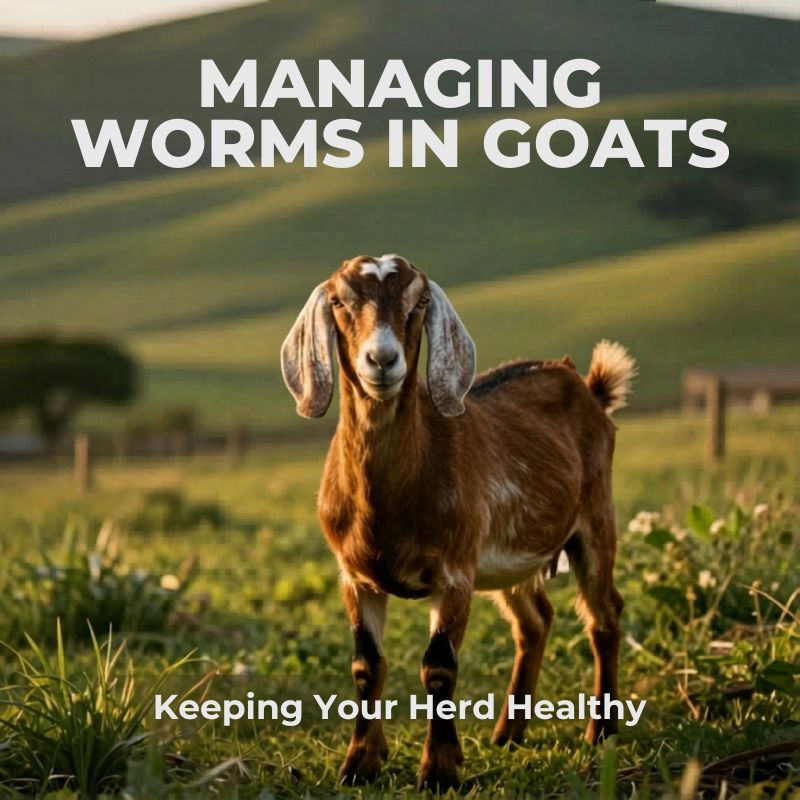

How We Manage Worms in Our Goats
June 16, 2026 2 min read
How We Manage Worms in Our Goats (And What We Watch For)
Worms have always been one of the biggest threats to our goats’ health. It’s something we’ve learned the hard way over the years.
At first, it’s easy to overlook. Goats can look “okay” for a while, even when something is off. But staying on top of parasite control is essential, and for us, that also means having a good veterinarian we trust to help us understand exactly what we’re dealing with.
Over time, we’ve developed a simple system—watching our goats closely, managing pasture conditions, and using fecal testing to guide decisions instead of guessing.
Why Monitoring Matters
Instead of relying on routine chemical worming, we work to understand what’s actually going on in our herd.
Once a year, we have the vet run fecal tests to check parasite levels. This gives us a clear picture and helps us make informed decisions.
Fecal Egg Count (EPG) Guide:
0–200 epg → Excellent (very low)
200–400 epg → Acceptable (low)
400–800 epg → Moderate (watch closely)
800+ epg → High (likely needs treatment)
Signs We Watch for in Our Goats
Daily observation is one of the most important tools we have. You can often catch problems early just by knowing what’s normal.
We look at:
Body condition (weight loss or changes)
Eyelid color (checking for anemia)
Inside of the mouth (pale vs. healthy color)
Behavior changes (less energy, acting off)
These small changes can tell you a lot before things become serious.
How Weather Affects Worms
Wet and Rainy Conditions (High Risk)
Rain and moisture create the perfect environment for parasites.
Moisture allows worm eggs to hatch quickly
Larvae climb wet grass and are easily eaten
Muddy, high-traffic areas increase contamination
Barber pole worms thrive in warm, wet weather
Result:
Rapid parasite buildup
Weight loss and anemia (often without diarrhea)
Dry and Drought Conditions (Lower Risk)
Dry weather can help reduce parasite pressure, but it doesn’t eliminate it.
Heat and dryness kill larvae
Pasture contamination decreases over time
But:
Short grass forces goats to graze closer to the ground where larvae live
Result:
Overall lower worm pressure
Increased risk if pasture is overgrazed
Pasture Height Rule
One of the most important things we’ve learned is to never let goats graze too short.
Try to keep pasture at least 3–4 inches tall.
Most parasite larvae stay close to the soil
Short pasture means higher ingestion of parasites
Basic Management Practices
Good management goes a long way in reducing parasite problems.
Keep hay available during rain or drought
Avoid muddy congregation areas
Prevent overgrazing
Watch goats closely for early signs
Finding What Works
There’s no one-size-fits-all answer when it comes to parasite management. Every farm is a little different.
For us, it comes down to paying attention, working with our vet, and staying consistent with the basics. It’s an ongoing part of farm life, but one that makes a big difference in keeping our goats healthy.
That same mindset carries into everything we do here at ChickenMash Farm—whether we’re caring for our animals or sharing pieces that bring a little bit of that farm life and history into your home.
Leave a comment
Comments will be approved before showing up.
Subscribe
Sign up to get the latest on sales, new releases and more …
Get the latest news and sales delivered to your inbox
Sign up for our newsletter to learn about new releases, exclusive deals and more!