

Free standard shipping for domestic orders over $59 with promo code FREESHIP
Free standard shipping for domestic orders over $59 with promo code FREESHIP
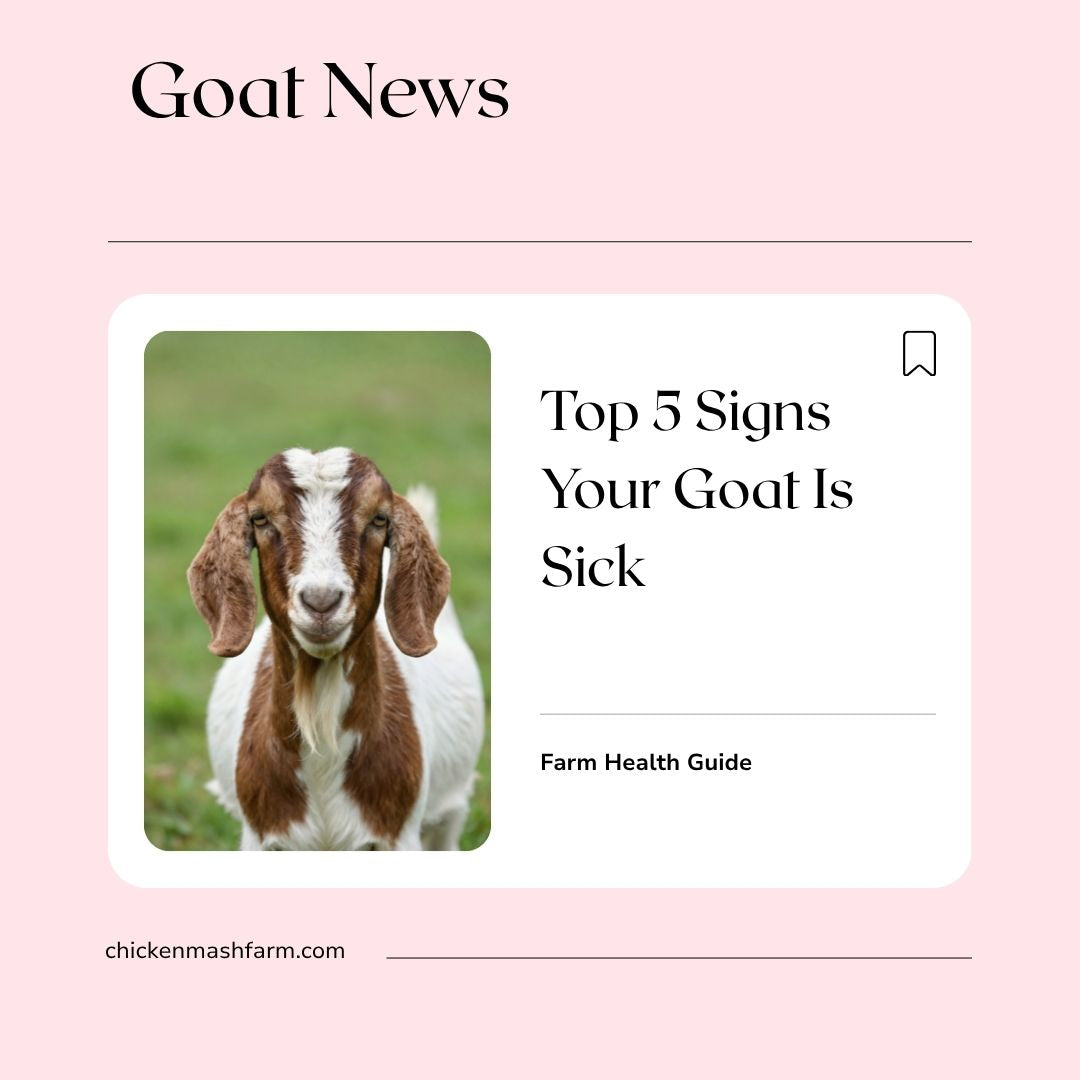

Top 5 Signs Your Goat Is Sick
June 09, 2026 3 min read
Top 5 Signs Your Goat Is Sick (What We Learned from Louie)
Recently, Louie—our buck—got sick, and it was a good reminder of how important it is to know your animals and recognize when something isn’t right.
While cleaning and refilling water buckets, I noticed right away he wasn’t acting like himself. Louie is usually pushy and nosey, always nudging and getting into whatever you’re doing. But this time, he just stood there. He wanted to be petted, but something was clearly off.
It happened over Memorial Day weekend—of course—when the vet wasn’t immediately available. So we focused on watching him closely and supporting him while we waited.
Top 5 Signs a Goat May Be Sick
1. Low Energy or Unusual Behavior
This was the first thing I noticed. Louie normally has a big personality, so when he stopped nudging and just stood quietly, it was a clear sign something wasn’t right.
2. Head Hanging Low
A healthy goat is alert and engaged. When their head is low for long periods, it’s often a sign they’re not feeling well.
3. Tail Down
A drooping tail is one of the biggest visual signs. Goats that feel good usually carry themselves differently—you can tell when their posture changes.
4. Rough or Dull Coat
Louie’s coat looked rough instead of smooth and healthy. Changes in coat condition can happen quickly when something is off internally.
5. Eating Less Than Normal
He was still eating, but not with his usual enthusiasm. Even small changes in appetite can be an early warning sign.
What We Do When a Goat Seems Off
While waiting on the vet, we gave Louie access to fresh baking soda and started him on our herbal immune tonic.
This is something we used years ago with our full-size Nubians, and now that we’ve switched to Mini Nubians, we’ve started using it again as part of our routine.
Our herd now gets it weekly, and if a goat seems off, we give it for three days in a row.
Our Herbal Immune Tonic
Dosing:
1–2 teaspoons per adult goat once per week
When needed:
1–2 teaspoons per goat for 3 days in a row
Formula (makes about 1½ cups):
¾ cup garlic
¾ cup thyme
⅓ cup ginger
⅓ cup slippery elm
¼ cup cinnamon
¼ cup comfrey (use lightly)
Optional: ¼ cup ground pumpkin seed
Preparation:
Mix all dry herbs and store in a jar. Sprinkle over feed with a little water or molasses, or form into small balls with oats and freeze.
If a goat is off feed, mix into a paste and give it however you can, even tucked into something like a date.
Use it when you notice:
Diarrhea from stress
Weight loss
After deworming
After kidding
Weather stress (rain, mud, temperature changes)
Adjusting to a new environment
Just to note, this is something we use on our own farm based on experience. We’re not veterinarians, and this isn’t meant to replace proper veterinary care—just an additional support we’ve found helpful over the years.
Getting Answers and Moving Forward
Once the vet came out, we found Louie had a slight fever along with a respiratory and sinus infection. He was given medication, and we continued supporting him with baking soda, selenium with vitamin E paste, and the herbal tonic.
By the next day, he was back to himself—pushy, nosey, and full of personality again. Exactly what we wanted to see.
Moments like this remind me how important it is to really know your animals. You notice quickly when something changes, and that can make all the difference.
That same care and attention carries into everything we do here at Chickenmash Farm, whether it’s raising animals, creating something by hand, or sharing pieces that bring a little bit of that life into your home.
Leave a comment
Comments will be approved before showing up.
Subscribe
Sign up to get the latest on sales, new releases and more …
Get the latest news and sales delivered to your inbox
Sign up for our newsletter to learn about new releases, exclusive deals and more!